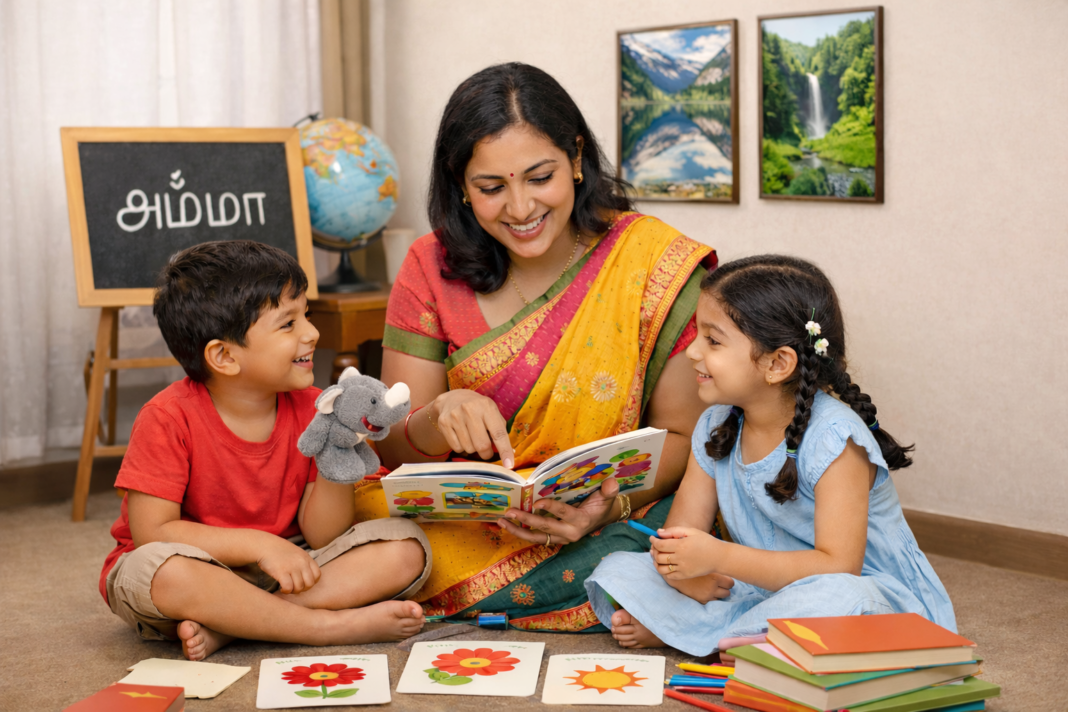

The preschool years are a crucial stage in a child’s overall development. During this period, children rapidly develop language, thinking, emotional understanding, and social skills. Preschool preparation is not limited to academic readiness such as learning numbers or alphabets; it also includes nurturing strong communication skills. One of the most effective ways to support this development is by teaching children their mother tongue through consistent and meaningful daily practices.

Importance of Mother Tongue in Early Childhood
A mother tongue is the first language a child hears and understands at home. It is the language through which children first learn to express emotions, needs, and ideas. When children develop strong skills in their mother tongue, they build a solid foundation for learning all other subjects later in life.
Key benefits of mother tongue development include:
- Cognitive growth: Children think, reason, and solve problems more effectively in the language they know best.
- Emotional security: Understanding and expressing feelings in the mother tongue helps children feel safe and confident.
- Cultural connection: Language carries traditions, values, and family history, helping children stay connected to their roots.
- Academic readiness: A strong first language supports literacy skills such as listening, comprehension, vocabulary, and early reading.
Children who are confident in their mother tongue often find it easier to learn a second or third language when they enter school.
Role of Parents in Preschool Language Preparation
Parents are a child’s first teachers, and the home environment is the most influential learning space during early years. Preschool preparation does not require formal lessons or pressure. Instead, language learning should happen naturally through everyday interactions.
Effective parent-led practices include:
- Regular conversations: Talking to children about daily routines such as meals, bathing, shopping, or travel.
- Active listening: Encouraging children to speak and patiently listening to their responses, even if words are unclear.
- Correct modeling: Gently repeating words or sentences correctly without criticizing mistakes.
- Encouragement: Praising children for trying to speak, which boosts confidence and interest in language use.
When parents consistently use the mother tongue at home, children naturally absorb vocabulary, sentence structure, and pronunciation.
Daily Activities That Support Mother Tongue Learning
Preschool preparation becomes more effective when language practice is integrated into daily activities rather than taught separately.
Some powerful everyday methods include:
Storytelling and Reading
Storytelling is one of the best tools for language development. Traditional folktales, family stories, and picture books expose children to new words and sentence patterns. Asking simple questions about the story encourages thinking and speaking.
Songs, Rhymes, and Poems
Rhymes and songs help children remember words easily and improve pronunciation. Repetition through music strengthens listening skills and builds rhythm in speech.
Play-Based Language Learning
Children learn best through play. Role-playing activities such as pretending to be a shopkeeper, teacher, or doctor encourage natural conversation in the mother tongue. Toys, puppets, and dolls can also be used to create simple dialogues.
Naming and Describing Objects
Parents can help children learn by naming objects around the house—furniture, food items, clothes, animals, and colors. Asking children to describe size, shape, or use helps expand vocabulary.
Art and Creative Expression
While drawing, painting, or crafting, parents can talk to children about colors, shapes, and ideas in the mother tongue. Encouraging children to explain their artwork helps develop expressive skills.
Preparing Children Emotionally and Socially for Preschool
Strong language skills in the mother tongue help children feel more confident in social situations. Children who can express themselves clearly are better able to:
- Communicate with teachers and peers
- Follow instructions
- Share feelings and resolve conflicts
- Participate actively in group activities
This emotional readiness reduces anxiety and helps children adjust smoothly to preschool or kindergarten environments.
Balancing Mother Tongue and Other Languages
In today’s world, many children are exposed to multiple languages. While learning additional languages is beneficial, the mother tongue should not be neglected. A strong foundation in the first language supports overall language learning. Parents should ensure that the child fully understands concepts in the mother tongue before introducing academic learning in other languages.
Preschool preparation is a holistic process that shapes a child’s future learning and personality. Teaching and practicing the mother tongue during early childhood builds confidence, strengthens family bonds, and supports emotional and intellectual development. Through daily conversations, storytelling, play-based learning, and positive encouragement, parents can create a rich language environment at home.
By nurturing the mother tongue in the preschool years, parents give their children a powerful gift—a strong voice, a clear identity, and a lifelong love for learning.